
Best GDPR Compliance Software for Small Business
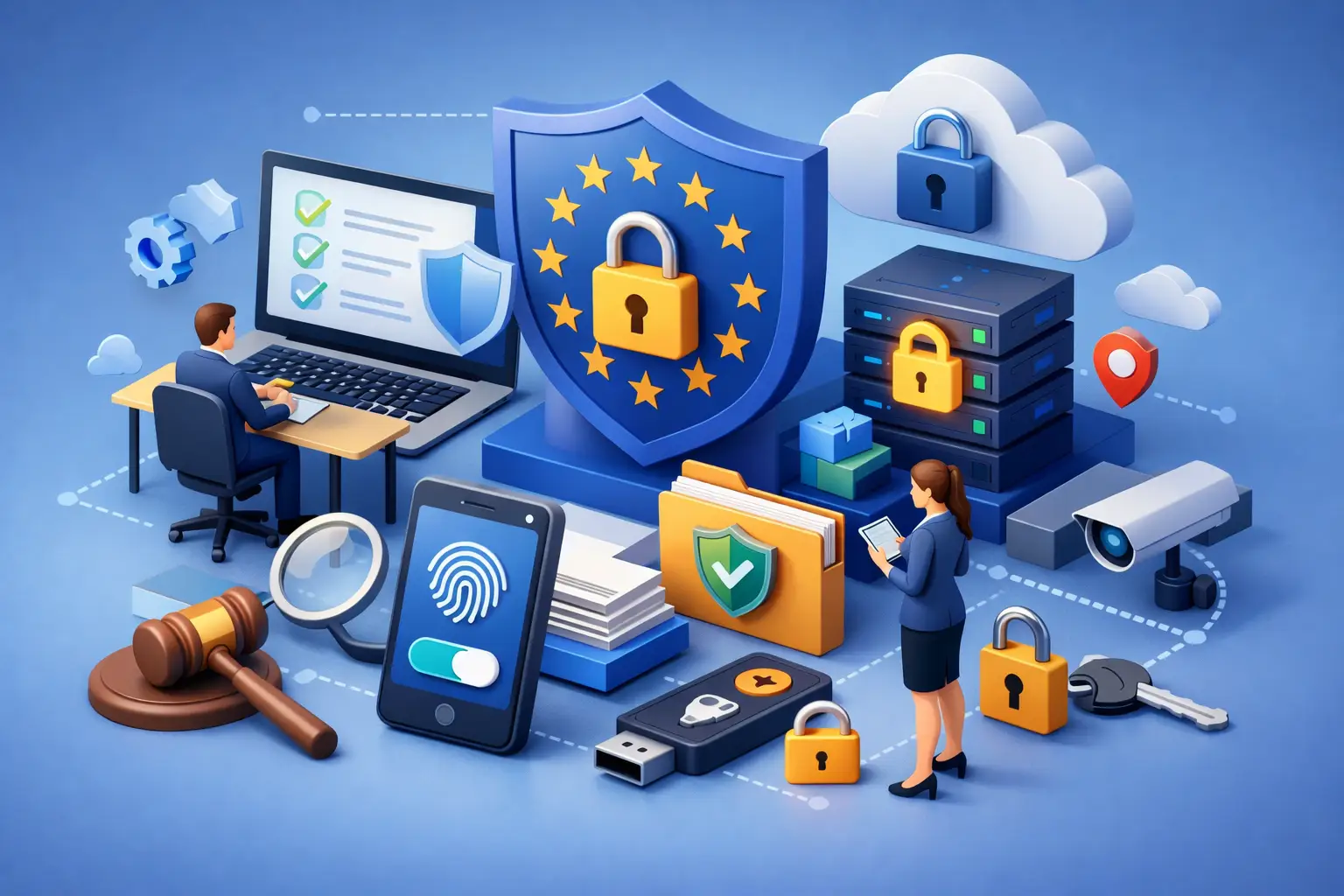
A subject access request lands in your inbox on a Tuesday morning. Someone on your team is chasing an overdue privacy policy update. Your customer data sits across email, HR files, cloud storage and a CRM. This is exactly where GDPR compliance software for small business stops being a nice-to-have and starts doing real work.
For most UK SMEs, GDPR is not the only compliance problem on the table. It is one of several moving parts competing for time, budget and attention. That is why the best software is not the one with the most legal jargon or the longest feature list. It is the one that helps you stop firefighting compliance, assign actions clearly, keep evidence in one place and show them the receipts when someone asks questions.
What small businesses actually need from GDPR software
Small businesses rarely fail on intent. They fail on consistency. A director knows GDPR matters, an office manager has a few templates saved somewhere, HR has its own process, and IT covers bits of security. Then a request comes in, a policy goes out of date, or a supplier asks for evidence, and everyone starts hunting through folders.
That is the real buying context. You are not looking for a legal textbook in software form. You are looking for a practical operating system for privacy tasks.
Good GDPR software should help you answer simple but critical questions. What data do we hold? Why are we processing it? What policies and records do we need? Who owns each action? What is overdue? What proof do we have if the ICO, a client or a partner asks?
If a tool cannot make those answers visible quickly, it will create more admin than it removes.
GDPR compliance software for small business: what to look for
The strongest platforms turn regulation into workflow. That matters more than flashy dashboards alone. A dashboard is only useful if it tells you what applies to your business, what needs doing next and what risk sits where.
Start with task management. GDPR work is made up of repeatable actions: policy reviews, lawful basis checks, training records, breach logging, retention reviews and response handling. Software should convert those into assigned tasks with deadlines, not leave them buried inside guidance notes.
Next, look at document control. Most SMEs do not struggle because they have no documents. They struggle because they have six versions of the same document, stored in three places, with no clear record of which one is current. Software should make it easier to generate, store and update policies, notices and supporting records without version chaos.
Evidence storage matters just as much. If you have completed staff training, reviewed a processor agreement or assessed a privacy risk, that proof needs to sit somewhere central. An audit trail and evidence vault can save hours when you need to prove action rather than promise it.
Regulatory change alerts are another big one. GDPR itself may feel established, but guidance changes, business practices evolve and related obligations shift. Small businesses do not have time to monitor every update manually. Software should flag relevant changes and tell you what they mean in plain English.
Finally, think about usability. If your team needs a consultant to explain the software, you have bought the wrong software.
Where many tools fall short
A lot of products in this space were not built with SMEs in mind. Some are enterprise governance systems dressed down for smaller firms. Others are security tools trying to stretch into privacy compliance. Both can miss the mark.
Enterprise GRC platforms often come with heavy implementation, complex configuration and a price tag that makes no sense for a 20-person firm. They may be powerful, but power is not the same as fit. If your business needs to manage core GDPR tasks without hiring a specialist, complexity is a cost.
Security-first tools have a different issue. They may handle technical controls well, but GDPR is broader than information security. It covers lawful processing, transparency, rights requests, retention, accountability and record-keeping. A software package that only shows your cyber posture is not giving you the full picture.
Then there are template libraries and static policy packs. These can be useful at the very start, but they do not manage ongoing compliance. A downloaded document does not track deadlines, assign responsibility or prove follow-through.
The trade-off between cheap tools and useful tools
Every small business watches spend. Fair enough. But with GDPR software, the cheapest option can become expensive fast if it still leaves your team running the process manually.
A basic template bundle may cost less upfront, yet the hidden cost sits in staff time, missed actions and poor visibility. On the other hand, not every business needs a massive system with advanced custom workflows and consultancy bolted on.
The sweet spot is software that gives you practical control without enterprise overhead. That usually means clear dashboards, structured tasks, sensible automation and enough flexibility to match how your business actually works.
It also depends on your risk profile. A two-person consultancy handling limited data has different needs from a growing care provider, recruiter or financial services firm. The more sensitive your data, the more sites or teams you manage, and the more often clients ask for evidence, the more valuable a proper system becomes.
Signs a platform will save time rather than create admin
You can usually tell within one product demo whether a platform understands SME reality. If it spends ten minutes showing abstract controls and five seconds on day-to-day tasks, be cautious.
Useful GDPR compliance software for small business should let you see your status at a glance, assign work quickly and find documents without digging. It should reduce dependency on external consultants for routine matters and help non-specialists take the right next step.
Plain-English guidance is a major advantage here. Most business owners do not want to interpret regulator guidance after hours. They want the software to translate obligations into actions they can complete during the working week.
Automation also needs to be practical. Automatic reminders, recurring reviews, document generation and central evidence capture are valuable. Fancy automation that still requires manual clean-up is not.
Why an all-in-one approach often makes more sense
For many UK SMEs, GDPR does not live in isolation. It overlaps with HR, health and safety, tax records, anti-money laundering checks and broader governance requirements. Running each area through separate tools can create exactly the fragmentation you were trying to avoid.
That is why more businesses are moving towards all-in-one compliance platforms rather than point solutions. If one system can show what regulations apply, track actions across departments and keep records in one place, you get better visibility and less duplication.
This is especially useful for growing firms. Once you add more staff, sites or functions, spreadsheet-based compliance starts to crack. A central dashboard with scoring, alerts, task checklists and an evidence trail gives leadership a clearer view of risk without forcing every department to build its own process from scratch.
CueComply takes that approach seriously. Instead of treating GDPR as a standalone legal headache, it places privacy obligations inside a wider compliance system built for UK SMEs, so teams can manage tasks, documents, deadlines and evidence in one place.
Questions to ask before you buy
Before choosing software, ask how quickly your team can get value from it. A six-month implementation defeats the point for most small businesses.
Ask whether the platform is genuinely UK-focused. That affects terminology, legal context and how useful the guidance will be in practice.
Ask what happens after setup. Compliance is ongoing. You need alerts, recurring actions and a reliable record of what has been done over time.
Also ask who the software is really for. If it assumes you have an in-house legal team, it is probably not designed for your business. The best SME tools are built for people who have jobs other than compliance, but still need to stay on top of it.
The right software should give you control
GDPR can feel bigger than it is when your information is scattered and responsibility is vague. The right software shrinks the problem. It shows what matters, what is overdue and what good looks like in practical terms.
That is the real value of GDPR compliance software for small business. Not more theory. Not more paperwork. Just a faster, clearer way to stay on top of obligations without paying consultant rates or relying on memory and luck.
If you are still managing privacy compliance through shared drives, calendar reminders and crossed fingers, the issue is not whether software is worth it. It is how much longer you want to keep carrying the admin, risk and uncertainty yourself.
The best next step is not to chase perfection. It is to put a system in place that makes compliance visible, manageable and provable from day one.
Stay on top of UK compliance
CueComply helps UK businesses manage GDPR, employment law, and health & safety compliance in one platform.
Get started free