
Evidence Vault for Compliance Records
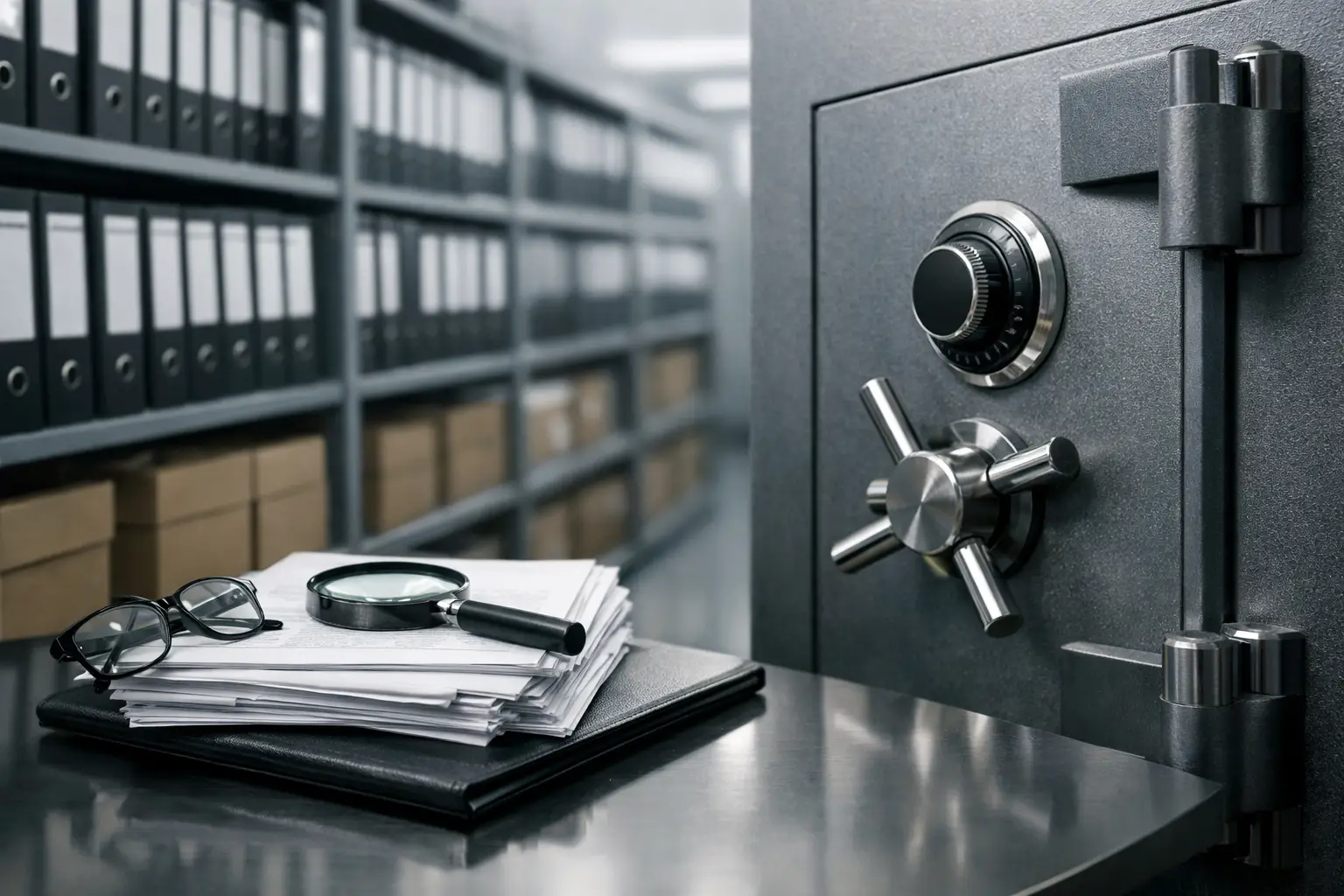
The awkward moment in any audit is rarely the rule itself. It is the scramble afterwards. Someone asks for proof of staff training, a risk assessment review, a right-to-work check, or the policy version in force last March, and suddenly three people are digging through inboxes, shared drives and old paper files. That is exactly why an evidence vault for compliance records matters. It gives you one place to store the proof, not just the paperwork, so when a regulator, client, insurer or external auditor asks questions, you can show them the receipts.
For most UK SMEs, compliance does not fail because nobody cares. It fails because evidence is scattered. A health and safety checklist sits in photos on a site manager's mobile phone. GDPR training certificates live in HR email folders. AML checks are saved in a finance system that nobody else can access. Tax records are filed correctly, but supporting approvals are nowhere obvious. The result is a business that may be doing the right work while still looking unprepared.
What an evidence vault for compliance records actually does
An evidence vault is not just cloud storage with a smarter label. It is a controlled, searchable record of what was done, when it was done, who did it and what proof supports it. The difference matters.
A normal folder structure can hold documents. An evidence vault for compliance records should also preserve context. That means linking evidence to tasks, deadlines, policies, staff actions, version history and audit trails. If a fire risk assessment was reviewed, the vault should not only hold the document. It should show the review date, the responsible person, the previous version and any follow-up actions.
That context is what turns a pile of files into defensible compliance records. Without it, you are still relying on memory, informal knowledge and crossed fingers.
Why shared drives and inboxes stop working
Shared drives feel cheap because you already have them. The real cost shows up later, when you need certainty. File names are inconsistent, permissions are messy, and nobody is fully sure whether the latest version is the right one. Email is worse. Once proof lives inside someone's inbox, it effectively belongs to that person until they leave, delete it or forget where they saved the attachment.
This becomes a bigger problem as the business grows. One site becomes three. One office manager becomes an ops team. More clients ask for supplier due diligence. More obligations overlap. Suddenly your compliance process depends on informal workarounds that nobody designed properly.
An evidence vault fixes that by replacing ad hoc storage with an operational system. It gives structure to the things auditors care about most: traceability, consistency, access control and speed.
The business case is not just about audits
Businesses often think about evidence storage only when an inspection is coming. That is too late. The real value appears every week.
When records are centralised, routine tasks take less time. Staff are not chasing colleagues for documents. Managers are not recreating forms they already completed six months ago. Onboarding new team members is easier because they can see what compliant looks like in practice. If there is a complaint, claim or internal issue, you have a reliable timeline rather than half a story.
There is also a commercial angle. Many SMEs now face compliance questions from customers before they win work. Procurement teams want proof of policy ownership, training, data handling, health and safety controls and governance standards. If you can answer quickly, you look credible. If it takes a week of internal chaos, you look risky.
So yes, an evidence vault helps during audits. More importantly, it stops compliance admin from draining time and credibility the rest of the year.
What good evidence looks like
Not every uploaded file is useful evidence. This is where many systems quietly fail. They collect documents, but not proof that stands up under scrutiny.
Good evidence is specific, dated and attributable. A signed policy acknowledgement is stronger than a note saying staff were informed. A completed training record with a timestamp beats a vague statement that training was delivered. A checklist linked to a named user and completion date is far easier to defend than a blank template sitting in a folder.
It also needs to be current. Out-of-date evidence can create a false sense of security. If your vault is full of expired certificates, old policies and overdue reviews, you have not solved the problem. You have simply archived it.
That is why the best setup combines storage with reminders, task tracking and a visible audit trail. Evidence should be created as part of the process, not dumped in afterwards when somebody remembers.
What to look for in an evidence vault for compliance records
If you are choosing a system, avoid anything that behaves like a digital attic. You want a platform that helps your team maintain order without needing a full-time compliance manager.
Searchability matters first. When someone asks for proof, you should be able to find it by obligation, employee, site, date or document type. Role-based access matters too, especially if records cover HR files, AML checks or sensitive data. Staff need the right visibility without exposing everything to everyone.
Version control is another non-negotiable. Policies, assessments and procedures change. If you cannot see what was in force at a particular time, your records become harder to defend. The same goes for timestamps and user activity. An audit trail is not admin theatre. It is evidence that your process exists beyond good intentions.
Finally, the vault should fit the way SMEs actually work. If uploading evidence is too fiddly, people stop doing it. If classification is too technical, records become inconsistent. Good compliance software reduces friction. It should tell users what is needed, where it belongs and when something is missing.
Where SMEs usually get this wrong
The most common mistake is treating evidence collection as a once-a-year clean-up job. That approach creates stress, gaps and unreliable records. By the time an audit lands, people are reconstructing history.
Another mistake is overcomplicating the system. SMEs do not need enterprise-grade bureaucracy with six approval layers for a basic policy update. They need a practical structure that keeps essential records complete, current and easy to retrieve.
The third mistake is separating actions from evidence. If tasks are tracked in one tool, documents in another and deadlines in a spreadsheet, nobody has a full view. That fragmentation is exactly what causes firefighting. You do not just need somewhere to put files. You need a record of the compliance activity around them.
Why this matters across different obligations
The same principle applies whether you are dealing with GDPR, employment law, health and safety, tax processes or anti-money laundering controls. Regulators and auditors do not only want to know your policy exists. They want signs that it has been implemented.
For GDPR, that may mean retention schedules, training logs, breach records and lawful basis documentation. For employment law, it could be right-to-work checks, contracts, grievance records and policy acknowledgements. For health and safety, it often means inspections, incident logs, risk assessments and corrective actions. Different areas, same pressure point: can you prove what happened?
That is where a central vault becomes genuinely useful. It creates a common standard across obligations instead of forcing each department to invent its own filing habits.
A smarter way to stay inspection-ready
Inspection-ready sounds expensive if you imagine consultants, binders and endless admin. It does not have to be. For SMEs, the smarter route is software that turns compliance into repeatable operational habits.
That means tasks trigger evidence, evidence is stored against the right requirement, records are searchable, and overdue actions are visible before they become a problem. A platform like CueComply is built for exactly that kind of practical control - one place to manage requirements, complete actions and keep the audit trail that proves the work happened.
The trade-off is simple. You spend a bit more discipline upfront so you spend far less time panicking later. That is a good deal for any busy business.
Compliance is hard enough without playing detective in your own files. If your proof is scattered, your risk is higher than it needs to be. Put the evidence where it belongs, keep it current, and make it easy to find. Future you will be grateful when the questions start.
Stay on top of UK compliance
CueComply helps UK businesses manage GDPR, employment law, and health & safety compliance in one platform.
Get started free