
Regulatory Change Monitoring Software That Works
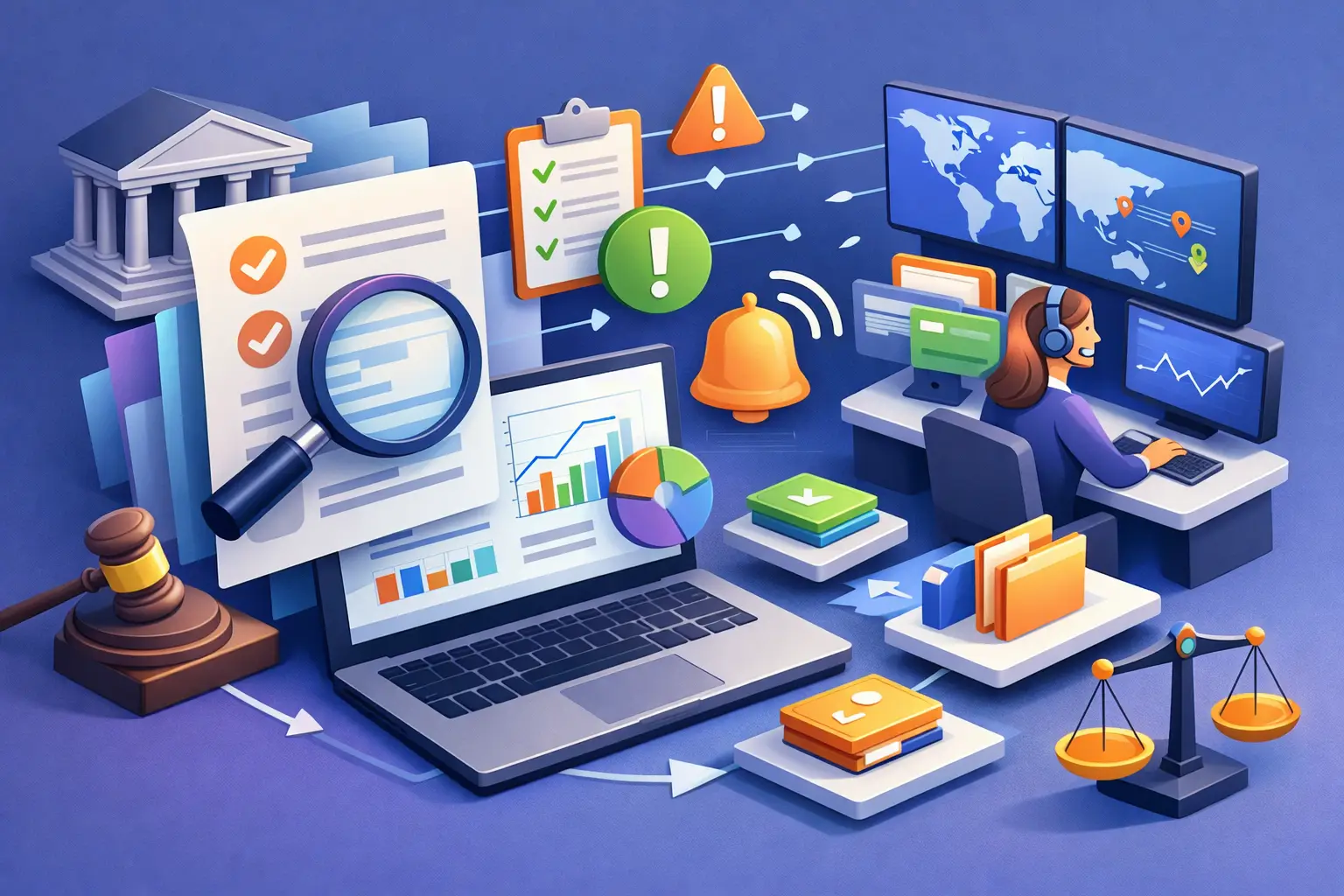
If you have ever found out about a legal change after the deadline, you already know the real cost of manual compliance. It is not just the fine. It is the scramble, the lost time, the awkward board conversation, and the uncomfortable feeling that your business is reacting late to rules it should have seen coming. That is exactly why regulatory change monitoring software has moved from a nice-to-have to a practical operating tool for UK businesses.
For SMEs, the problem is rarely a lack of effort. It is volume, fragmentation and ambiguity. GDPR updates sit in one place, employment law guidance in another, health and safety changes somewhere else, and tax obligations in a completely different workflow. Someone in the business is expected to keep an eye on all of it, usually on top of their actual job. That is how compliance turns into firefighting.
What regulatory change monitoring software actually does
At its best, regulatory change monitoring software does not just send alerts. Plenty of tools can dump headlines into an inbox. The useful software goes further. It tracks relevant legal and regulatory changes, filters out what does not apply to your business, translates updates into actions, and assigns deadlines so something actually happens.
That distinction matters. A generic alert that says employment law has changed is not very helpful if you still have to work out whether it affects your contracts, policies, onboarding process or payroll. Good software narrows the scope. It shows what has changed, why it matters to your organisation, what evidence you should keep, and who needs to do what next.
For a growing UK business, that means less time interpreting regulator language and more time completing the task in front of you. It also creates a record. If you are asked what you did, when you did it and why, you can show the receipts rather than relying on memory and scattered documents.
Why UK SMEs struggle without it
Large enterprises can throw teams, legal budgets and heavyweight GRC systems at the problem. Most SMEs cannot. They usually manage compliance through spreadsheets, calendar reminders, email chains and the knowledge sitting in one or two people’s heads. That setup can work for a while, until the business grows, regulation shifts, or the key person goes on leave.
The bigger issue is inconsistency. One department updates a policy quickly, another misses the change, and a third does not know there was a change at all. When regulators, insurers, clients or investors ask for evidence, the business ends up piecing together screenshots, old documents and half-finished notes. That is not a system. It is damage control.
Manual monitoring also creates a false sense of security. Businesses often assume that because nobody has raised a problem, they must be covered. In reality, they may simply have gaps they have not spotted yet. That is especially risky across areas like data protection, AML, HR and health and safety, where obligations evolve through legislation, regulator guidance and practical enforcement trends.
What to look for in regulatory change monitoring software
The first thing to check is relevance. Software should not flood your team with every possible update under the sun. It should filter changes based on your sector, size, activities and obligations. If the tool treats a ten-person UK services business like a multinational bank, it will create more noise than value.
The second is actionability. Alerts are only useful if they lead to clear next steps. Look for software that turns changes into tasks, templates, checklists or document updates. If your team still has to interpret everything manually, you are paying for a news feed, not a compliance system.
The third is visibility. You need to see open actions, deadlines, owners and completion status in one place. Directors and managers should be able to answer a simple question quickly: are we on top of this, or not? Dashboards, scoring and evidence tracking help because they replace guesswork with a current operational view.
The fourth is audit readiness. This tends to get overlooked until someone asks for proof. Good software should maintain an audit trail showing when a change was logged, what action was assigned, who completed it, and what supporting evidence was saved. That is what moves compliance from informal effort to defensible process.
Finally, look at usability. If software requires specialist training or reads like it was built only for enterprise risk teams, SMEs will not stick with it. Plain English matters. So does sensible setup, affordable pricing and workflows that reflect how real businesses operate.
Regulatory change monitoring software is not just an alert tool
This is where buyers often get caught out. Some vendors position themselves as monitoring platforms, but what they really provide is content aggregation. They tell you a rule changed, then leave the hard part with you.
A practical system should connect the update to business operations. If a regulation affects staff training, there should be a way to assign the training. If it affects policies, there should be a workflow to review and update the document. If it changes retention requirements, the business should be able to record the decision and evidence the new process.
That link between change and action is what saves time. It is also what reduces dependence on consultants for routine issues. External advice still has a place for complex edge cases or major disputes. But most SMEs do not need to pay consultancy rates just to understand that a policy needs updating and a deadline is approaching.
Where the trade-offs are
Not every business needs the same level of monitoring. A small firm with straightforward obligations may only need a focused platform covering the key areas that apply to it. A larger, multi-site organisation with sector-specific rules may need deeper workflows, more custom permissions and broader evidence management.
There is also a trade-off between breadth and simplicity. Some systems cover almost everything, but become slow and difficult to manage. Others are easy to use, but too narrow once the business grows. The right answer depends on your risk exposure, internal resources and how many regulatory areas you need to control from one place.
Automation is another area where it depends. Automation can reduce admin dramatically, but it should not create blind trust. You still need named owners, sensible review points and management oversight. Software should sharpen accountability, not blur it.
How the best platforms fit into day-to-day work
The strongest regulatory change monitoring software becomes part of normal operations rather than a separate compliance project. A manager logs in and sees what has changed, what is overdue, and which documents need attention. HR can check employment law actions. Operations can track health and safety tasks. Finance can review tax-related obligations. Leadership can see the overall picture without chasing updates across departments.
That is where the commercial value shows up. Less duplication. Fewer missed deadlines. Quicker policy updates. Better evidence when clients or regulators ask questions. Most importantly, less time spent worrying whether someone remembered to check the right guidance page last week.
For UK SMEs, this is also about cost control. The choice is not just between software and doing nothing. The real comparison is software versus recurring consultant spend, internal admin hours and the cost of mistakes. When a platform can centralise obligations, send targeted alerts, guide actions and store evidence, it starts replacing several disconnected processes at once.
CueComply is built around that reality. It is designed for UK businesses that need clear actions, not compliance theatre. Instead of burying teams in enterprise complexity, it brings regulatory changes, task tracking, guidance, documents and evidence into one working dashboard.
A smarter way to judge value
Do not judge these platforms by the number of alerts they send. Judge them by what happens after the alert. Can your team understand the change quickly? Can they assign the work? Can they complete it with confidence? Can they prove it later?
If the answer is yes, the software is doing its job. If not, you are still relying on manual interpretation and scattered follow-up, just with a shinier interface.
The businesses that handle compliance well are not usually the ones with the biggest legal teams. They are the ones with the clearest system. When regulation changes, they do not panic. They know what applies, what needs doing, and where the evidence sits. That is the standard worth aiming for, because compliance gets much easier once it stops living in somebody’s inbox.
Stay on top of UK compliance
CueComply helps UK businesses manage GDPR, employment law, and health & safety compliance in one platform.
Get started free