
UK Business Compliance Software That Works
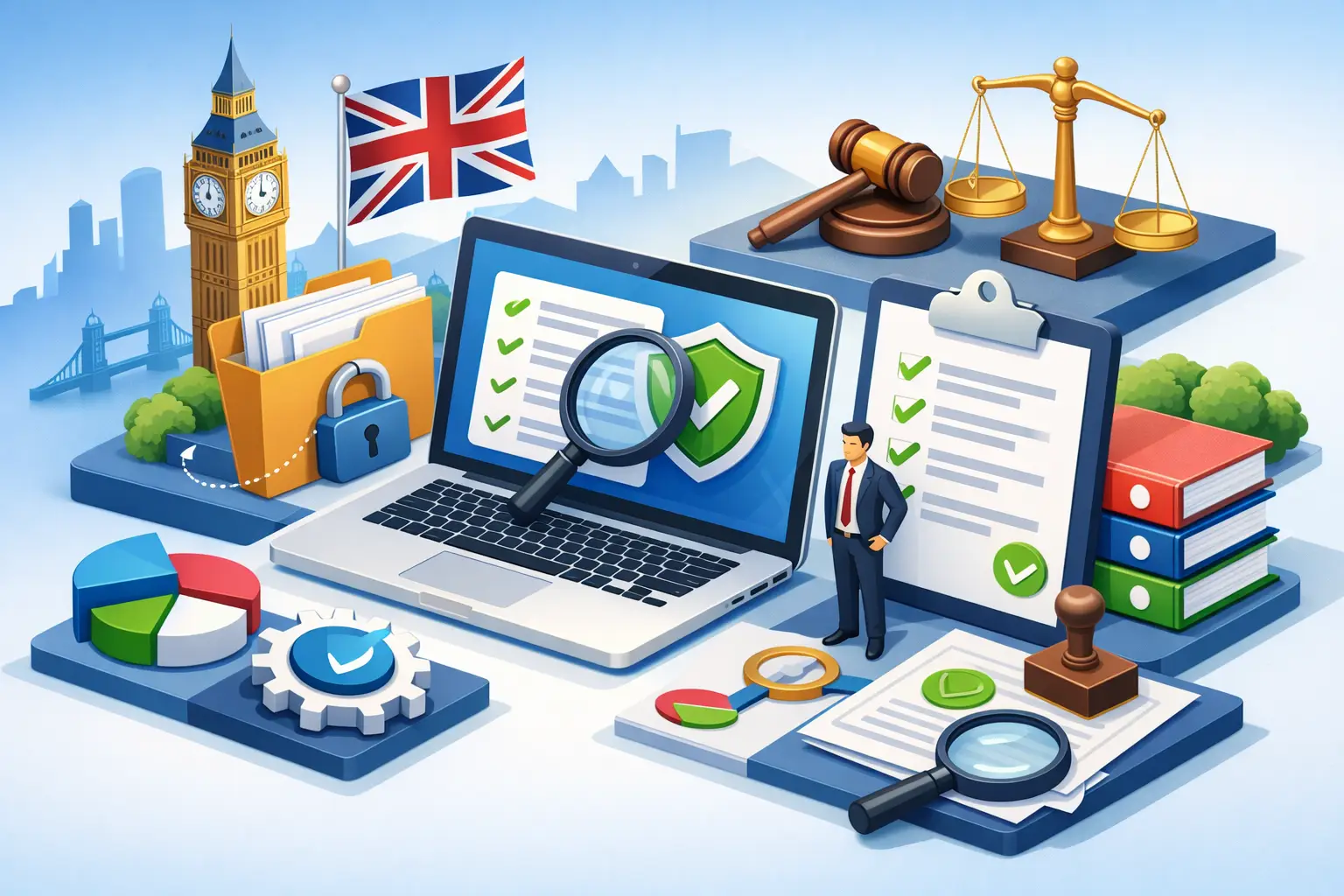
If your compliance process lives across spreadsheets, inboxes, old policies and one person’s memory, you do not have a process. You have a liability. That is exactly why more firms are looking at uk business compliance software - not as a nice-to-have, but as a practical way to stop firefighting GDPR, HR duties, health and safety, tax deadlines and governance tasks.
For most UK SMEs, compliance goes wrong in boring ways. A right-to-work check is missed. A policy goes out of date. A training record cannot be found when someone asks for it. A director assumes payroll or data protection is “covered” because nobody raised an issue last month. The problem is rarely a total lack of effort. It is fragmentation. Too many obligations, too many moving parts, and no single view of what applies to the business right now.
Good software fixes that. Not by burying you in legal jargon, and not by pretending a ten-person firm needs the same governance stack as a listed company. The real value is simpler than that: clarity, deadlines, accountability and evidence.
What uk business compliance software should actually do
A lot of tools claim to help with compliance when they really handle one narrow slice of it. You might get a document store, an e-learning portal or a data protection template pack. Useful, sometimes. But if the bigger problem is that your obligations are spread across multiple areas, point solutions can leave you with the same mess in a nicer interface.
Effective uk business compliance software should tell you three things without delay. What rules apply to your business, what action is required, and when it needs doing. If it cannot do that clearly, it is not reducing risk. It is just moving it around.
That matters because SME compliance is rarely confined to one department. Employment law touches HR and operations. GDPR affects marketing, customer service and IT. Health and safety lands with site managers and office leads. AML checks may sit with finance or client-facing teams. Tax compliance involves payroll, bookkeeping and deadlines that do not politely wait until someone has capacity.
Software that works in the real world pulls those threads into one operational system. That usually means a dashboard showing live status, task lists with owners and due dates, alerts when regulations change, and an evidence trail that proves work happened. It should also help you generate and update the documents you actually need, rather than forcing you to start from a blank page every time the law shifts.
Why SMEs need a different kind of tool
Enterprise GRC platforms are often too expensive, too technical and too heavy for growing businesses. On the other hand, hiring consultants for every change is slow and costly. Neither option suits a company that needs answers this week, not after a procurement cycle or a day rate discussion.
That is where the market has changed. SMEs now want software that behaves like an operations tool, not a legal research project. They want plain English prompts, sensible workflows and a clear score or status indicator that tells them where they stand. They do not want to interpret regulator guidance line by line just to work out whether a basic action is overdue.
There is also a budgeting reality here. Many smaller firms are not trying to build a compliance department. They are trying to keep the business moving without getting caught out. The right platform replaces a patchwork of consultants, manual trackers and panic-led clean-ups with something more predictable and affordable.
The features that matter most
The first feature to look for is applicability. A decent platform should not dump every possible regulation on your desk. It should show what is relevant to your sector, size, activities and risk profile. Too many generic systems create noise, and noise is dangerous because teams stop paying attention.
The second is actionability. Alerts are useful only if they explain what to do next. If a regulation changes, your software should point to the policy, record, process or training task affected. “Something changed” is not enough. Businesses need “here is the task, here is the deadline, here is the evidence to keep”.
The third is accountability. Compliance fails when everyone assumes someone else is handling it. Good software assigns tasks, tracks completion and shows overdue actions fast. That is especially important in firms where compliance sits across office management, HR, finance and operations rather than in one specialist team.
The fourth is proof. When an auditor, insurer, client or regulator asks for evidence, you need more than confidence. You need records. An audit trail and evidence vault turn compliance from a verbal claim into something you can show. That shortens response times and removes a lot of last-minute scrambling.
Finally, there is usability. If the system is clunky, your team will avoid it. If the guidance sounds like a legal textbook, people will skim it and guess. Software should reduce cognitive load, not add to it.
Where businesses often buy the wrong thing
One common mistake is buying for a single pain point while ignoring the broader process. A business worried about GDPR may buy a privacy tool, then realise it still lacks visibility over HR documents, HSE checks or company governance actions. Another mistake is choosing software based on template volume rather than operational control. A folder full of policies is not the same as an active compliance system.
There is also a temptation to overbuy. Some firms are sold heavyweight platforms built for multinational governance teams. The demos look impressive. The day-to-day reality is slower. Implementation drags, staff need training just to use the basics, and simple tasks become admin in their own right. For SMEs, complexity is not a sign of maturity. Often it is just waste.
The better question is this: will the tool help your team act quickly and consistently every week? If the answer is yes, you are looking in the right direction.
How software changes day-to-day compliance work
The biggest shift is that compliance moves from reactive to scheduled. Instead of remembering obligations when a deadline looms, teams work from a visible queue of actions. Instead of checking multiple sources to see what has changed, they receive targeted alerts. Instead of rebuilding evidence packs under pressure, they store records as they go.
That changes behaviour. Directors get oversight without chasing updates. Office and operations managers stop carrying the entire mental load. HR and finance teams know what is assigned to them and when it falls due. The business becomes less dependent on the one person who “just knows how this works”.
This is also where AI can help, if it is applied properly. AI is useful when it translates regulation into practical guidance, drafts documents from structured inputs, and helps users find the next action quickly. It is less useful when it produces vague commentary with no operational follow-through. The test is simple: does it save your team time while improving consistency? If not, it is a gimmick.
What a sensible buying process looks like
Start with your current failure points. Not the theoretical ones - the real ones. Missed reviews, scattered documents, uncertainty over ownership, poor visibility for directors, or too much money spent asking advisers basic questions. Those are the gaps the software must close.
Then look at scope. Can the platform cover multiple compliance areas in one place, or will you still be stitching together separate systems? There is no rule that one tool must do everything, but if your biggest risk is fragmentation, more fragmentation is not the answer.
Ask how the platform handles regulatory change. UK compliance is not static. Employment rules shift, data guidance evolves, tax obligations move, and sector expectations tighten. Software should keep pace without making you monitor every regulator manually.
Finally, look at proof of use. Can you see completed tasks, due dates, document versions and stored evidence? Can a manager or director get a quick read on status without asking three different people? If the answer is yes, the tool is probably built for operational reality rather than sales theatre.
A smarter alternative to consultants and chaos
Consultants still have a place, especially for complex disputes or highly specialised advice. But most SMEs do not need to pay expert rates to keep routine compliance under control. They need a system that turns obligations into clear actions and keeps the evidence tidy.
That is why platforms like CueComply are gaining ground. They give businesses a UK-specific, plain-English way to centralise obligations, track deadlines, generate documents and show the receipts when someone asks. For companies stuck between expensive advisers and overbuilt enterprise tools, that middle ground is not a compromise. It is often the better option.
If compliance currently depends on memory, heroics and last-minute fixes, software is not just about efficiency. It is about getting your business back in control before the next missed task turns into a bigger problem.
Stay on top of UK compliance
CueComply helps UK businesses manage GDPR, employment law, and health & safety compliance in one platform.
Get started free