
Compliance Dashboard for SME: What to Look For
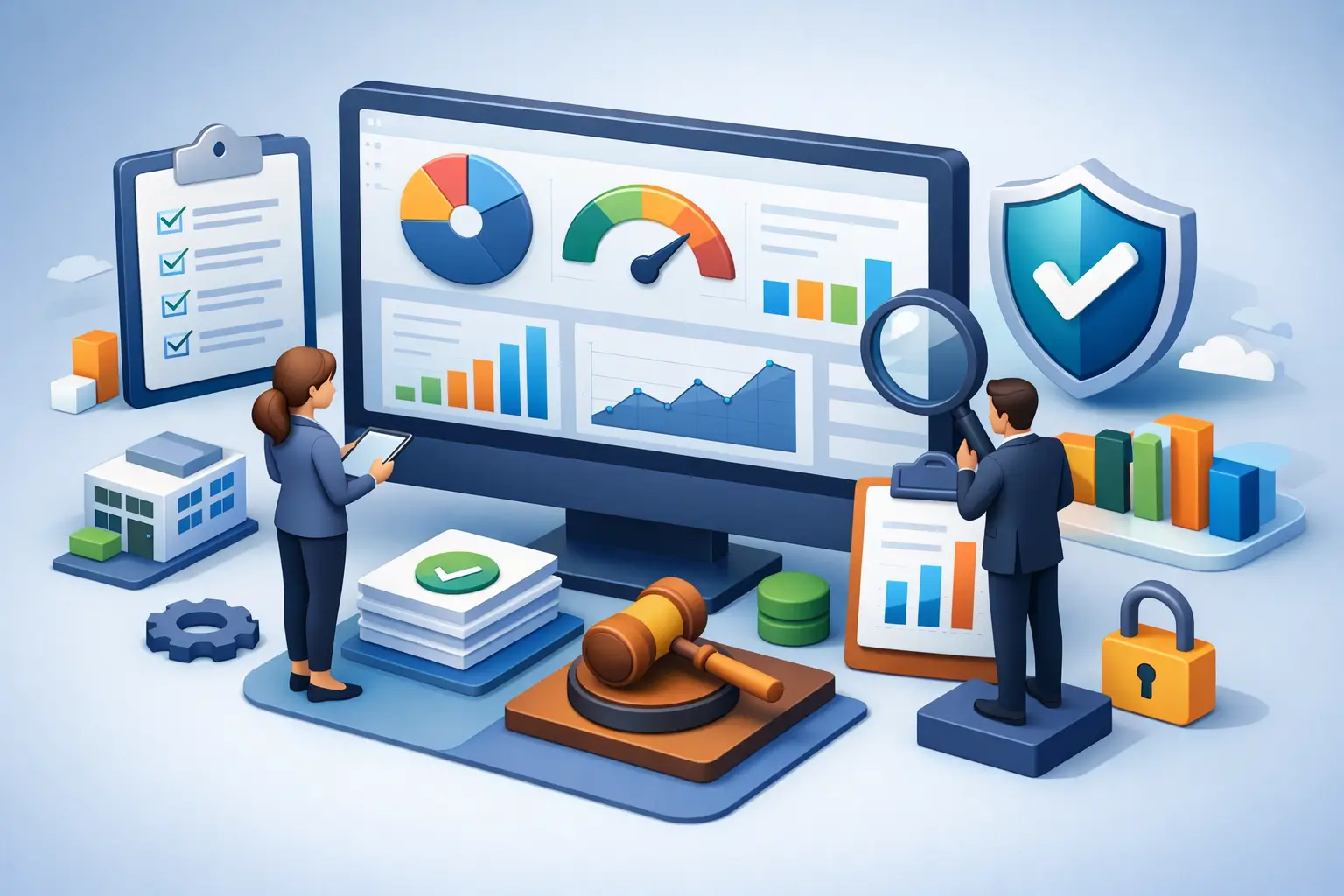
If your compliance lives in a spreadsheet, three inboxes, a shared drive and someone’s memory, you do not have a system. You have a risk. A compliance dashboard for SME teams fixes that by turning scattered obligations into one clear view of what applies, what needs doing, and what can wait until next week.
For most UK SMEs, that clarity is the difference between controlled operations and constant firefighting. The issue is not usually a lack of effort. It is that GDPR sits in one corner, HR policies in another, health and safety checks somewhere else, and tax or anti-money laundering obligations are tracked in completely different ways. When responsibilities are split across people who already have day jobs, things get missed.
Why a compliance dashboard for SME teams matters
Large enterprises can throw people and budget at compliance. Most SMEs cannot. The founder, office manager, HR lead or finance manager ends up carrying it alongside everything else. That creates a very specific problem: compliance becomes reactive. It gets attention when a deadline is near, when an insurer asks questions, or when a client requests proof.
A good dashboard changes the operating model. Instead of chasing rules, you manage actions. Instead of guessing what matters, you see a prioritised list. Instead of scrambling for documents, you have an evidence trail ready when someone asks.
That matters commercially as much as legally. Missed obligations waste time, trigger avoidable costs and undermine trust. Even when the issue is small, the clean-up is rarely small. Policies need updating in a rush, staff need retraining, documents need locating, and senior people get pulled into admin they should not be doing.
What a good dashboard actually does
A proper compliance dashboard is not just a prettier spreadsheet. It should translate regulation into business tasks. That means showing which obligations apply to your business, who owns each action, what deadlines matter, and what proof you need to keep.
The strongest systems also give you a scoring view. That score is not there for decoration. It gives you a quick sense of exposure across areas like data protection, employment law, health and safety, tax processes and governance. If your score drops because training has expired or a policy review is overdue, you can act before the problem grows.
This is where many generic tools fall short. They track tasks, but they do not understand compliance context. Enterprise GRC platforms often go too far the other way. They are expensive, heavy and built for teams with specialists, not for a growing UK business trying to stay on top of practical obligations without hiring a department.
The features worth paying for
The best value comes from features that remove interpretation work, not just admin. Regulatory change alerts matter because rules move. But alerts on their own are not enough. You need to know what changed, whether it applies to your business, and what action is expected.
AI-assisted guidance can be useful here, provided it stays grounded in plain English and points towards action. SME teams do not need essays on legislation. They need to know whether they must update a policy, issue a notice, record a risk assessment or assign training.
Automated document generation is another strong differentiator. Policies, registers, notices and checklists take time to produce from scratch, and inconsistent documents create their own risk. If your dashboard can create compliant templates based on your business profile, that saves both time and consultant spend.
An audit trail and evidence vault are equally important. This is the part many businesses realise they need only when challenged. Doing the work is one thing. Proving you did it, on time, with records, is what protects you under scrutiny. If a system cannot show dates, owners, completed actions and supporting evidence, it leaves a gap where it matters most.
What to avoid when choosing a system
The first red flag is complexity dressed up as sophistication. If the demo looks impressive but you already know your team will not use it, walk away. A dashboard that needs weeks of setup, specialist training or constant tuning is not built for an SME reality.
The second is a tool that focuses on one domain only. Cyber and information security platforms often call themselves compliance tools, but many only cover a narrow slice of what SMEs actually deal with. If your business also needs employment compliance, health and safety oversight, tax process controls or anti-money laundering checks, you will end up back in the same fragmented mess.
The third is vague coverage. Some systems promise broad support but give little detail on jurisdiction, sector relevance or how obligations are mapped. For UK businesses, UK-specific guidance matters. You need content and workflows aligned to the rules you actually face, not generic global statements that still leave you guessing.
How SMEs should assess fit
Start with your current pain, not the feature list. Are you missing deadlines, struggling to assign ownership, dealing with duplicated documents, or panicking when a client asks for evidence? The right dashboard should solve the pressure points that cost you the most time and create the most risk.
Then look at how the platform handles mixed responsibilities. In most SMEs, compliance is shared across operations, HR, finance and leadership. A useful system needs role-based clarity without becoming bureaucratic. People should be able to see what they own, what is overdue and what needs escalation.
It is also worth checking how the system grows with you. A ten-person business may need simple task tracking and policy control today. A fifty-person business may need multi-site oversight, stronger audit records and better reporting for directors. If the tool only works at one stage of growth, you may be replacing it sooner than you think.
The real trade-off: software versus consultants
Some businesses assume software cannot replace advisory support. Sometimes that is true. If you are dealing with a live dispute, a regulator investigation or a highly unusual issue, specialist advice still has a place.
But that is not where most compliance spend goes. A lot of SME money disappears into repeat questions, template documents, routine updates and manual tracking. That is exactly the work software should handle better and at lower cost.
The practical model for many businesses is simple: use software for the day-to-day engine, then bring in expert advice only when a genuinely complex issue appears. That gives you control without paying consultant rates to manage recurring admin.
What this looks like in day-to-day operations
Imagine an operations manager walking into Monday with a single dashboard showing overdue actions, upcoming deadlines and a current compliance score. HR can see that handbook updates are due next month. Finance can see tax process checks needing sign-off. The office manager can confirm health and safety actions are complete. Directors can see where the exposure sits without chasing four people for updates.
That changes the mood as much as the process. Teams stop relying on memory. Meetings become shorter because the facts are visible. When a customer asks for evidence, you are not rummaging through folders and forwarded emails. You show them the receipts.
That is the real point of a compliance dashboard. It does not make regulation disappear. It makes it manageable.
A platform like CueComply is built around that reality for UK SMEs. The value is not in making compliance sound clever. It is in making it clear enough to run as part of normal operations, without a consultant translating every requirement or a manager losing half a day to admin.
A smarter way to think about compliance
The most effective SMEs do not treat compliance as a box-ticking exercise or a legal burden parked in the background. They treat it as operational discipline. The same visibility that helps you hit deadlines and keep records also reduces disruption, supports customer trust and gives leadership fewer nasty surprises.
So if you are weighing up a compliance dashboard for SME use, ask one blunt question: will this reduce effort while improving control? If the answer is yes, it is probably worth serious attention. If the answer is more setup, more complexity and more dependency, it is just another layer of admin pretending to help.
Good compliance software should make your business feel calmer, faster and harder to catch out. That is a standard worth holding.
Stay on top of UK compliance
CueComply helps UK businesses manage GDPR, employment law, and health & safety compliance in one platform.
Get started free